
Mokwateh, an Indigenous-owned consulting firm founded in 2020, specializes in Indigenous engagement and reconciliation. They serve Indigenous communities, organizations, businesses and Corporate Canada. With extensive experience, they bridge gaps, fostering common good by applying corporate best practices through an Indigenous lens, offering tailored, high-quality and innovative solutions to Indigenous and non-Indigenous clients alike.
Lighting the Path
Labour Market Dynamics in the Energy Transition of Indigenous Communities

About this Report
Lighting the Path is a labour market study that seeks to collaborate with and learn from Indigenous communities to help shape a sustainable and inclusive energy future rooted in traditional values and community aspirations.
This study focuses on understanding the workforce capacity in rural and remote Indigenous communities to participate in zero-to-low-carbon energy transition initiatives.
Indigenous Peoples, especially those in remote areas reliant on diesel fuel, are highly vulnerable to climate change impacts. For decades, they have been on the frontlines of this crisis, raising alarms to their respective governments. Achieving Canada’s net-zero objectives necessitates effective collaboration with First Nations, Inuit and Métis Peoples in northern and rural regions.
One of the key challenges in achieving energy transition objectives in these areas is addressing the significant structural issues in the labour market.
Key Takeaways
- Comprehensive Collaboration: Reducing diesel use in Indigenous communities requires coordinated efforts that address economic, technological, environmental and logistical challenges.
- Stable Government Funding: Long-term financial support is essential to sustain energy initiatives and attract private investment, creating local career opportunities and reducing outmigration.
- Accessible Education & Training: Programs must be practical, relevant to the renewable energy sector, and integrate traditional Indigenous knowledge to build a skilled, employable workforce.
- Supportive Regulations: Clear, fair and adaptable regulatory frameworks are needed, with additional government support to overcome unique challenges in remote communities.
- Inclusive Partnerships: Effective collaboration among Indigenous communities, governments, utilities and private organizations should ensure transparency, shared decision-making, and community ownership.
- Broader Impact: These efforts support Indigenous self-determination, economic empowerment, and help Canada meet its climate goals through the transition to clean, reliable energy systems.
Photo credit: Green Sun Rising Inc

Recommendations
Looking ahead, the following recommendations are offered to ensure that energy-transition projects align with Indigenous priorities, integrate traditional knowledge and provide long-term benefits to the community. Together, these recommendations aim to foster effective partnerships, facilitate knowledge sharing and support community health and well-being.
Further details on each recommendation are provided in the full report.
For Partners Outside the Community
e.g., government, business and other partners
Partnership Best Practices
- Ensure Early and Frequent Engagement
- Listen and Implement Community Needs
- Leverage Specific Environmental Knowledge
- Create Formal Partnerships and Agreements
Facilitate Knowledge-Sharing and Capacity Building
- Provide Alternative Methods to Deliver Training Programs
- Support High School Achievement and Career Pathways
- Create Apprenticeship, Mentorship and Internship Programs
- Support Temporary Relocation for Training
- Deliver Land-Based Training
- Provide Cultural and Historical Awareness
Support Community Health, Well-Being and Healing
- Eliminate Barriers to Training and Services
- Invest in Health and Wellness Initiatives
For Partners Inside the Community
e.g., rural and remote Indigenous community’s government, business and other partners
- Strengthen Ties with Committed Partners
- Advocate for Customized Skills Training
- Develop Community Energy Plans
- Encourage Youth Engagement
- Address Systemic Challenges
Photo credit: Saskatchewan Research Council / Cowessess First Nation

Project Support
This report would not have been possible without the participation of rural and remote Indigenous communities in Canada.
We are deeply grateful for their valuable insight and counsel throughout this research.
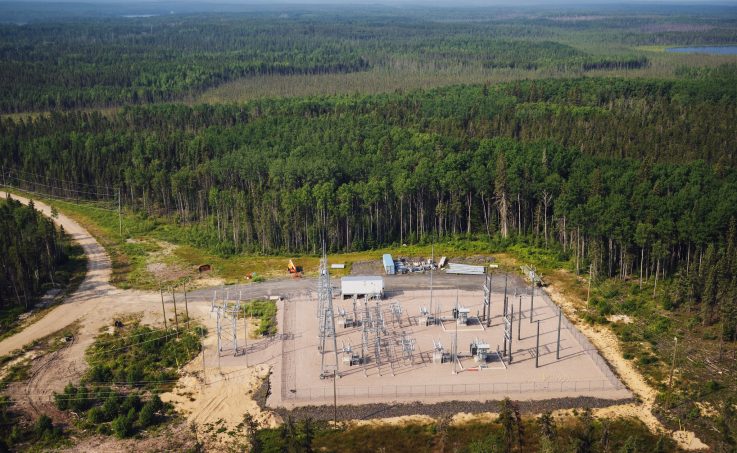
Photo credit: Wataynikaneyap Transmission Project
Respecting and Amplifying Indigenous Voices
In alignment with EHRC’s Reconciliation Action Plan, we have partnered with Mokwateh to support our commitments to Indigenous Peoples, respecting and amplifying their voices as part of this work. Mokwateh’s expertise has been instrumental in facilitating our engagement with a diverse representation of Indigenous communities across Canada.

Developed in Collaboration with Mokwateh
Thank You to Our Sponsors
-
CUSW

Supporting Sponsor
-
Electricity Canada

Contributing Sponsor
-
Manitoba Hydro

Contributing Sponsor
Acknowledgements
This project benefited from the contributions of many talented people. We are grateful for the generous time and support from employers, educational institutions and industry stakeholders. Our sincere thanks to the following individuals.
EHRC
- Michelle Branigan, CEO
- Mark Chapeskie, VP of Programs
- Yulia Nerovny, Economist
- Sheldon Polowin, Economist
- Ryan Baan, Marketing & Communications Manager
Mokwateh
- Max Skudra, Partner
- Katarina Savic, Director, Advisory Services
- Izaak Wapachee, Senior Consultant
- Grayden Gamble, Junior Consultant
Project Steering Committee
- Mike Belmore, External Relations Officer, The Society of United Professionals
- Raquel Boyko, Director, People Strategies and Programs, SaskPower
- Donna Burnett-Vachon, Director, Change and Organizational Development, Hydro Ottawa
- Al Clark, Member, EHRC Board of Directors
- Daniel Deleary, Community Engagement Coordinator, Aboriginal Apprenticeship Board of Ontario
- Rod Gallant, Recorder, Canadian Union of Skilled Workers
- Tiffany Hoskins, Business Partner, ED&I, TransAlta Corporation
- Corey Mattie, Partner, Balsam
- Aileen Maynard, Electrical Engineer, Hedgehog Technologies
- Mariana Resener, Assistant Professor, Simon Fraser University
- Alex Sosso, Professor, Cégep de l’Outaouais
- Carol Thiessen, Diversity, Equity and Inclusion Lead, Manitoba Hydro
- John Wabb, President, CUSW
- Jennifer Whyte, Staff Officer, Power Workers’ Union
- Geri Yin, Vice President, GRE&T Centre, Alectra Utilities
Design by Spruce Creative
Spruce Creative is a majority Indigenous-owned agency based in Ottawa, ON. Spruce is on a mission to use their strategic, creative, and collaborative gifts to help the good grow in our communities.
Funded in part by the Government of Canadea
This project has been funded in part by the Government of Canada’s Smart Renewables and Electrification Pathways Program.
-
Government of Canada

Electricity Human Resources Canada
About Us
EHRC is the leading provider of research and analysis on human resources issues impacting Canada’s electricity and renewable energy sector. We empower the sector to meet its evolving workforce needs by delivering strategies and programs that help employers recruit, retain and develop the skilled workers essential for operating an efficient and reliable electricity system.
We deliver critical business intelligence that informs labour market decision-making, forge partnerships that enable the industry to adapt and upskill and lead initiatives that strengthen and sustain a safety-focused, innovative and inclusive workforce. We are dedicated to building a world-class electricity workforce that supports Canada’s transition to a low-carbon economy.

Confidentiality and Respect
EHRC is committed to respecting the confidentiality, privacy and dignity of all participants involved in this study. Any personal information acquired in the study is held in strict confidence by EHRC’s staff and trusted contractors. Insights and perspectives shared by community members are anonymized, ensuring they are not directly attributable to any specific individual or business entity. The identities and contact information of any community members or service providers involved in this study are not publicly disseminated or shared with any third party. EHRC takes concrete measures to ensure that information relevant to this project is only provided to staff and contractors on a need-to-know basis.
Commitment to Principles
EHRC adheres to the OCAP principles (Ownership, Control, Access, and Possession) concerning the storage, use, and dissemination of any information obtained during this project. All EHRC personnel involved in this study are trained to use the OCAP framework.